We are Loom Indica — a bridge between India's most gifted weavers and the people who believe clothing can carry culture. From a small studio with a big dream, we have grown into a family of 500+ artisan households across 12 states.
It started with a visit to Chanderi in 2018. Walking through the narrow bylanes of this ancient weaving town in Madhya Pradesh, our founder watched a master weaver — fifth generation — bend over his loom at dawn, transforming raw silk threads into something that could make you cry for its beauty.
The tragedy was simple: this extraordinary craft was invisible to the world. The middlemen's chain was so long that the weaver earned ₹200 for a saree that sold for ₹8,000 in a city boutique. And the buyer had no idea who made what they wore.
"The weaver and the wearer should know each other's names. That is what Loom Indica exists for."
From a small studio in Bhopal with ₹50,000, a laptop, and twelve artisan partners, we launched loomindica.com. The first order took three weeks to arrive. The second never made it on time. But with every stumble, we learned — and we stayed close to the artisans who trusted us.

India has over 4.5 million weavers — and most of them are invisible. We are changing that, one purchase at a time, by connecting artisan communities directly with people who care about where their clothes come from.
Six principles that guide every decision we make — from the artisan's loom to your doorstep.
Every decision is filtered through one question: does this help the artisan? Their livelihood, dignity, and creative freedom are non-negotiable.
We reject fast fashion's disposability. Handloom is slow by nature — each piece takes days or weeks. We celebrate that slowness as the mark of true quality.
You deserve to know who made your saree, where, and how. We share artisan stories, GI tags, and supply chain details for every product.
We work to keep centuries-old techniques alive — not as museum pieces, but as living, evolving crafts worn in everyday life. Tradition must breathe to survive.
We reinvest in artisan clusters — funding skill workshops, children's education, and healthcare for weaver families. Profit is a tool, not the goal.
Shopping for handlooms should feel like a celebration — of craft, of culture, of the remarkable human hands that made something just for you.

We work with 500+ families spanning Odisha's Ikat clusters, Chanderi's silk weavers, Rajasthan's block printers, Kutch's Ajrakh masters, and Madhya Pradesh's Bagh printers — among many others.
These are not suppliers. They are creative partners, cultural custodians, and the reason Loom Indica exists. We visit each cluster at least twice a year. We know the weavers' children's names.
In 2025, Loom Indica paid over ₹2.8 crore directly to artisan families — 100% of which went to the makers, not to agents or middlemen.

Meera has been weaving Ikat sarees for over 30 years, a craft passed from her grandmother's grandmother. Her geometric patterns — tied thread by thread — tell stories of Odisha's folk memory.
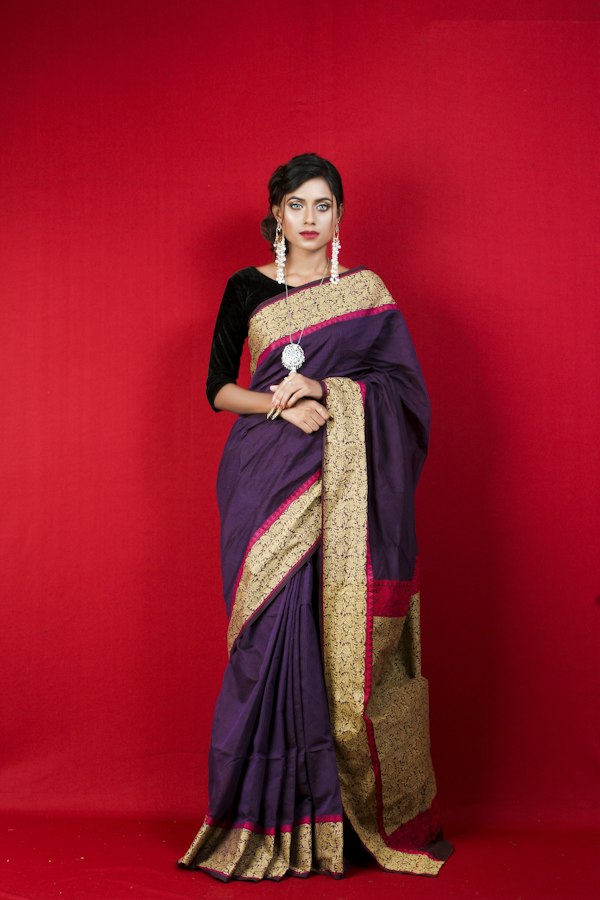
A third-generation Chanderi weaver, Ramesh specialises in gossamer-thin silk-cotton fabrics adorned with traditional coin and peacock motifs — each one woven on a handloom that is over 80 years old.

From the village of Ajrakhpur, Ismail carries forward the 4,000-year Ajrakh tradition using only natural dyes — indigo, madder, and pomegranate rind. His work is collected by museums worldwide.
From a small studio with a big dream to a thriving platform connecting hundreds of artisan families with thousands of customers.
Founded in Bhopal with ₹50,000, a laptop, and 12 artisan partners. The first collection: 24 Chanderi sarees. Sold out in 6 days via Instagram.
Reached 100 happy customers. Expanded to Varanasi Banarasi clusters and Rajasthan's Sanganer block printers. Launched the website's first full catalogue.
During Covid, when supply chains collapsed, we created the Loom Indica Artisan Support Fund — delivering direct relief to 80 weaver families who had lost income.
Became an official partner for GI-tagged handloom products. Every Chanderi, Bagh, Maheshwari, and Sambalpuri product now carries verified provenance documentation.
Crossed the milestone of 500 artisan family partnerships spanning 18 distinct regional weaving and printing traditions across 12 Indian states.
Celebrating 12,000+ customers across India, USA, UK, Canada, Australia, and the Gulf. Our Net Promoter Score hit 78 — because happy artisans make happy customers.
Launching the Loom Indica Artisan Skill Academy — a training programme to bring younger generations into the weaving craft. And expanding to 5 new craft clusters.
The shortest path from artisan hands to your hands — with full traceability at every step.
We visit artisan clusters directly, build personal relationships, and co-create collections that honour traditional motifs while meeting modern tastes.
Each piece is quality-checked, GI-tagged where applicable, and photographed with the artisan's story before it enters our catalogue.
You browse our curated catalogue, read the artisan's story, and make a purchase knowing exactly where your money goes — and who it supports.
Your piece is hand-packed by the artisan's family, wrapped in organic cloth, and shipped directly to your door — with a handwritten note from the maker.
The Ajrakh saree I received is breathtaking. But what moved me more was the card with the artisan's photo and name. I wear it knowing whose hands made it.
I've bought handlooms from boutiques charging 5× the price. Loom Indica's quality is identical — but here I know my money is actually reaching the weaver.
As an NRI, finding authentic Indian textiles without getting duped is near impossible. Loom Indica's transparency gave me full confidence. Worth every rupee.
Every purchase at Loom Indica is a direct vote of confidence in an artisan family. Browse our handpicked collection of authentic handwoven clothing — from Ajrakh sarees to Chanderi silk to Ikat cotton.